
 You Have More Space Than You Think
By Monica Leed, Simply Spaced
There’s a corner in almost every home that nobody knows what to do with. Maybe it’s the awkward nook off the kitchen that was supposed to be a breakfast area but ended up as a dumping ground. Maybe it’s the long, narrow hallway that feels like wasted square footage. Or the living room wall you’ve stared at for three years, certain nothing will ever fit there quite right.
Here’s what I’ve learned after years of helping people transform their homes: the space isn’t the problem. The thinking is.
Most of us default to shopping for furniture the same way we’ve always done it: walking into a showroom, imagining how something might look, and hoping for the best. We buy a sofa that’s two inches too wide. We skip the built-in because we can’t picture it. We leave that corner empty because it feels too complicated to solve.
But it doesn’t have to be.
The Spaces You’re Probably Wasting Right Now
Before you buy a single thing, walk through your home with fresh eyes. Look for the in-between spaces, the ones you’ve stopped seeing because you decided they were unsolvable. Here’s what I find most often:
The abandoned breakfast nook. That small corner off the kitchen has more potential than almost any other space in your home. A custom banquette (a built-in bench seat that wraps the corner) does three things at once: it creates a dining area, it adds serious storage underneath with lift-top or pull-out drawers, and it makes the space feel designed rather than forgotten. It turns a problem corner into the most charming spot in the house.
The blank living room wall. A standard sofa against a wall is fine. But a storage sofa, or a built-in sectional with integrated shelving on either side, turns a passive piece of furniture into an intentional design statement. You get seating, storage, and a focal point all in one. This is especially valuable in smaller homes where every piece needs to earn its place.
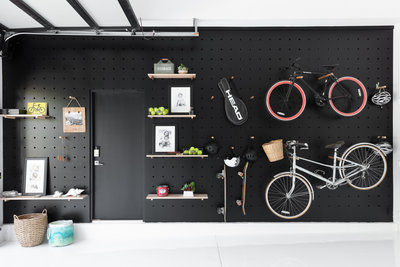
The narrow hallway or entryway. Most people think you need depth for storage. You don’t. Narrow-depth cabinets, just 10 to 12 inches deep, can line a hallway without encroaching on the walking space. Add hooks above, drawers below, and suddenly a dead zone becomes a functional mudroom or display wall. The key is going vertical rather than wide.
Under the stairs. This is one of the most underused spaces in any multi-level home. Depending on the configuration, you can fit pull-out drawers, a reading nook with cushions, a mini home office, or a dedicated mudroom station. None of it requires a major renovation. Just intentional planning.
The bedroom wall you’ve ignored. Floor-to-ceiling built-ins on a single bedroom wall can replace a dresser, two nightstands, and a wardrobe while making the room feel larger, not smaller. When furniture becomes architecture, the eye reads it as part of the room rather than stuff inside it.
Why Most People Don’t Do This (And Why That’s Changing)
The honest answer is fear of commitment. Custom furniture and built-ins feel permanent, expensive, and above all, hard to visualize. If you can’t see it, you won’t spend money on it.
That’s the barrier that’s quietly disappearing.
Design professionals and furniture manufacturers have long used 3D rendering technology to visualize custom pieces before anything gets built. A furniture 3d rendering company works with brands and manufacturers at the production level, rendering furniture in photorealistic detail so designers and clients can see exactly what they’re getting before a single piece of wood is cut. It’s the industry standard for a reason: seeing is committing.
The good news for homeowners is that a version of this is now available to everyone, for free.
The Apps That Make This Possible
You don’t need a professional rendering studio to visualize a banquette in your breakfast nook. A handful of consumer apps now let you plan, place, and preview furniture in your actual space before you make any decisions:
- Planner 5D — Beginner-friendly and free to start. Draw your room, drop in furniture, and switch to 3D view instantly. Great for experimenting with built-ins and custom layouts.
- HomeByMe — Offers a more polished 3D experience with access to real furniture brand catalogs. Ideal if you want a realistic preview of how finished pieces will look.
- IKEA Place — If you’re planning to use IKEA furniture or hack your way to a built-in (a very valid approach), this app lets you place pieces in your real space using augmented reality.
- Arcadium 3D — A strong, all-around free option with fast rendering and easy sharing, good for presenting ideas to a contractor or carpenter.
The workflow is simple: measure your space, sketch it in the app, experiment with configurations, and screenshot what works. Then hand that to a carpenter, a contractor, or your IKEA cart.
The Simply Spaced Approach
Here’s what I always tell my clients: every inch of your home should have a purpose. Not a forced purpose. An intentional one. When a space sits empty or underused, it doesn’t just waste square footage. It creates low-level visual noise that you feel even when you’re not looking directly at it.
Custom and built-in furniture solves this in a way that freestanding pieces often can’t, because it says this space was designed, not assembled. There’s a calm that comes from a room where everything fits. Where the corner finally makes sense. Where you stop walking past the hallway and start actually using it.
You have more space than you think. You just haven’t seen it yet.
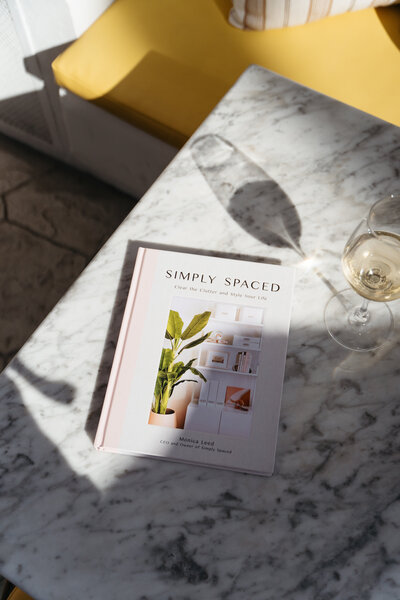
Monica Leed is a professional organizer, author of Simply Spaced: Clear the Clutter and Style Your Life, and the founder of Simply Spaced. She helps clients in Southern California and virtually create homes that feel as good as they look.
Ready to transform your space? Work with Monica →